crm call plan review
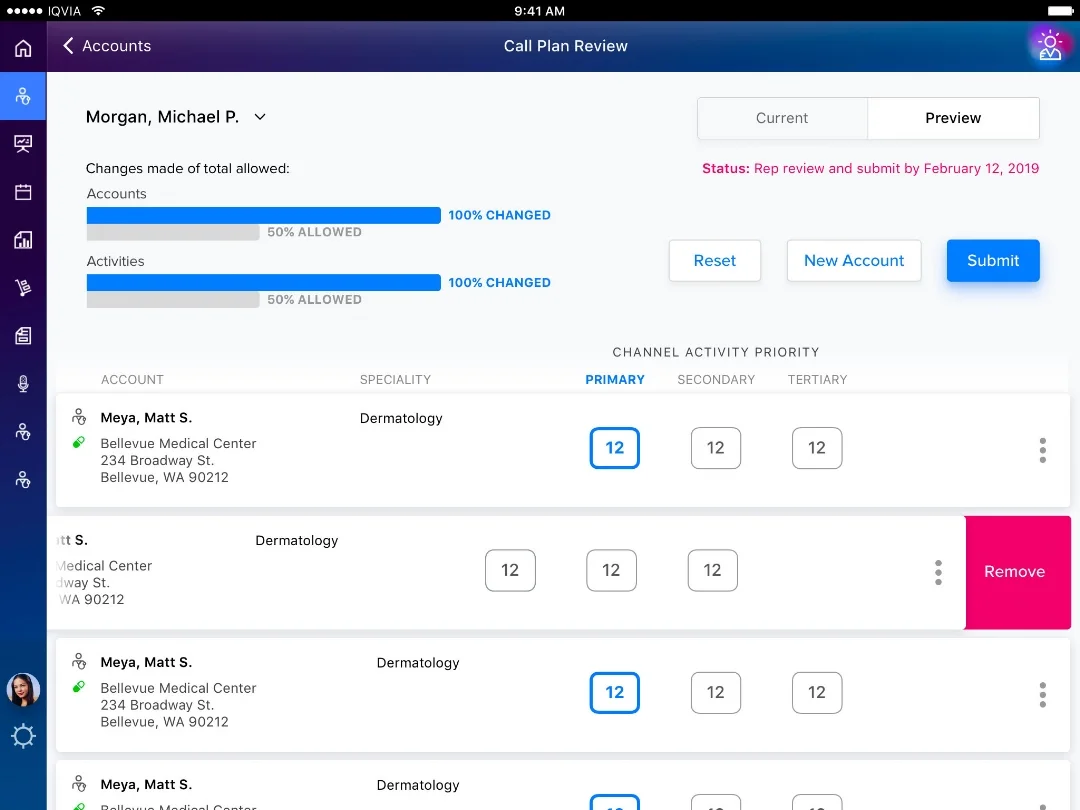
This is the final UI created from my wireframes.
My process
requirements gathering
I started out learning about the user, their motivations and context, and the goals, and limitations of the project.
user flow
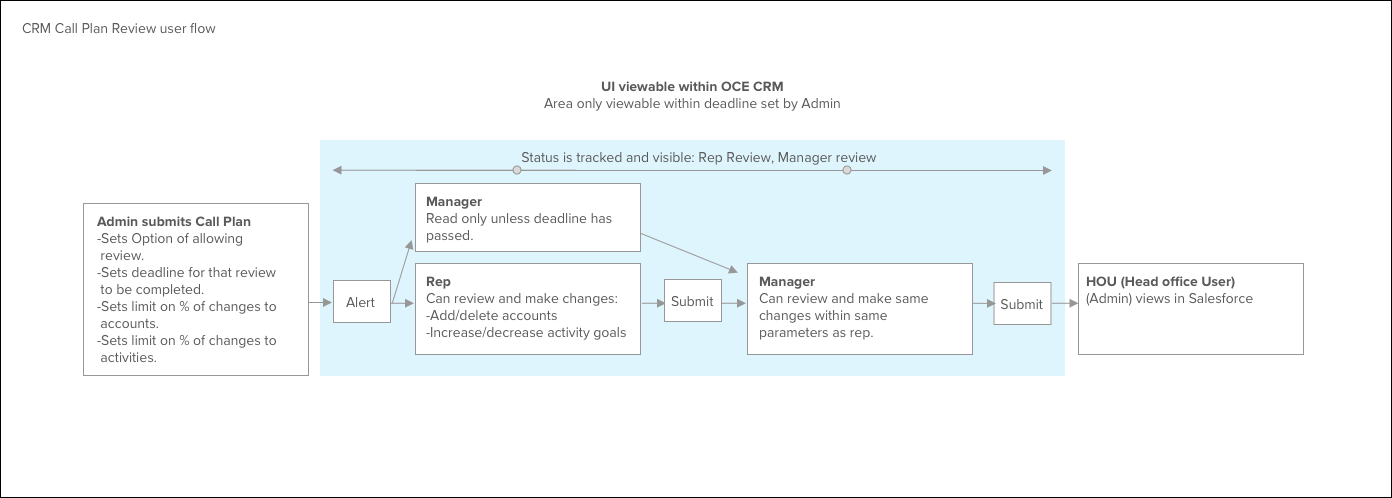
The next step in the process is creating a user flow, this serves multiple purposes:
It is a great way to make sure UX has thoroughly thought through a problem.
Provide a check with stakeholders to be sure we’re on the same page.
It provides the beginnings of knowing what will need to be wire framed.
Lastly, development is often brought in at this point if we are to be working in tandem.
In this case, my user flow is quite untraditional in appearance, but served well to communicate to stakeholders.
white boarding
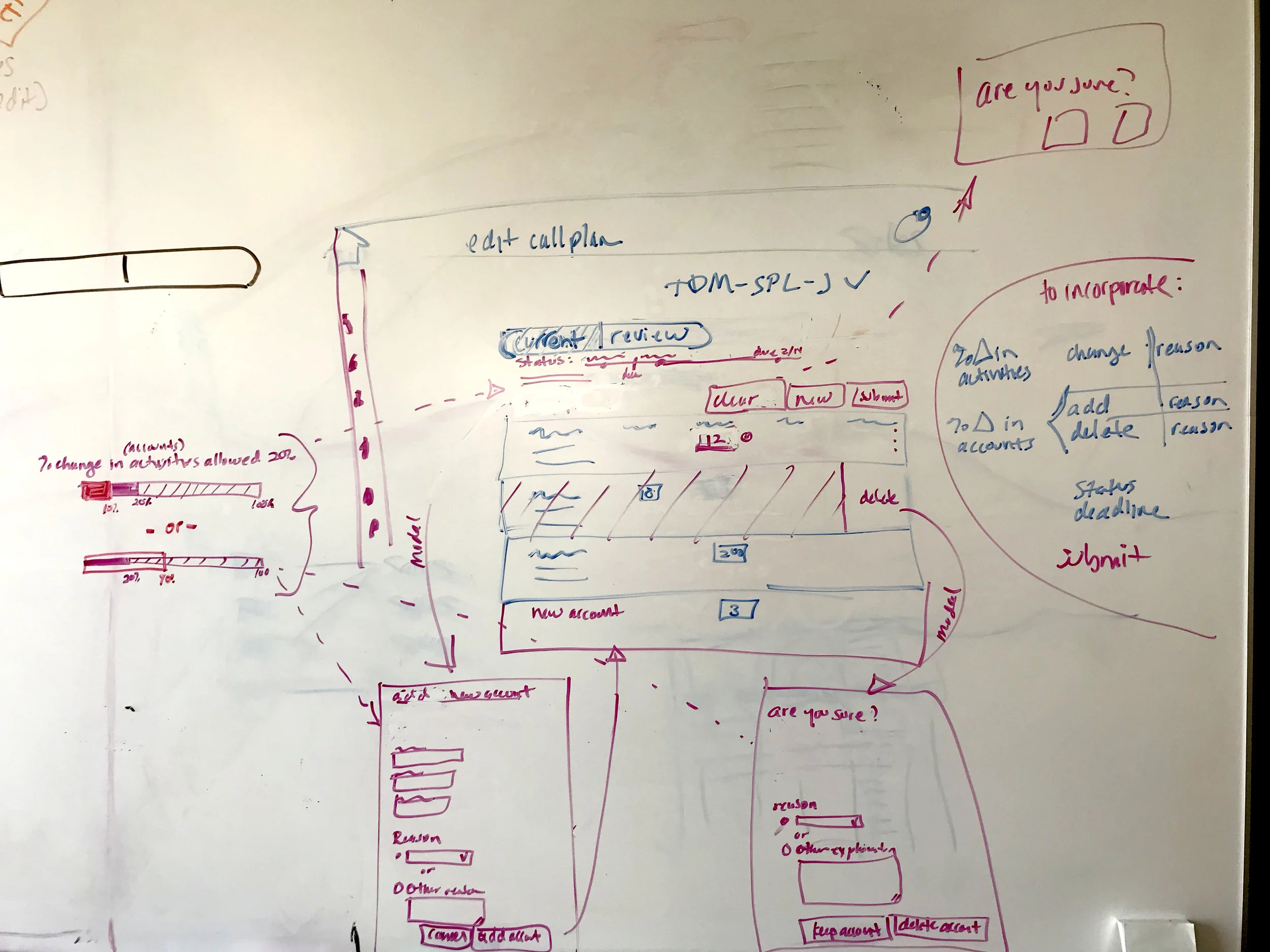
After stakeholder agreement on user flow, I move to the whiteboard to do the first of many iterative drafts of wireframing, an opportunity to get to another level of depth, ensuring that all scenarios are being addressed and all requirements are being met.
At this stage I’m really looking hard at
How will the user be interacting with this?
Are we meeting all of the business requirements?
Are all of the possible scenarios being addressed?
Where could this break?
This stage is where the really hard thinking and problem solving are done. It’s very easy to look at different approaches at the whiteboard stage, and gets progressively more difficult as I move in higher fidelity wireframing and prototyping.
My Role:
UX design
Wireframing
User research
The Problem:
A giant potential customer promised to buy our product if we would add in a new feature. They wanted a way to allow Sales Reps and Managers of this native iPad app a platform to suggest and review Call Plan changes within limited parameters and small time windows before activation.
The Solution:
I created a Call Plan Review tool that leveraged familiar CRM patterns supplemented with controls, data visualizations, and guardrails for the user as they make their changes. This design allows complete user freedom to add or delete contacts, change the number of calls, and offer reasons for each. Reps and Managers can then tweak it until they get it exactly the way they want it, and it’s within guidelines set by their Admin.
The Result:
The customer was very pleased with the new feature and committed to a multimillion dollar contract. Then other customers followed.
Timeframe:
This feature was designed within two sprints.
First round of wire framing
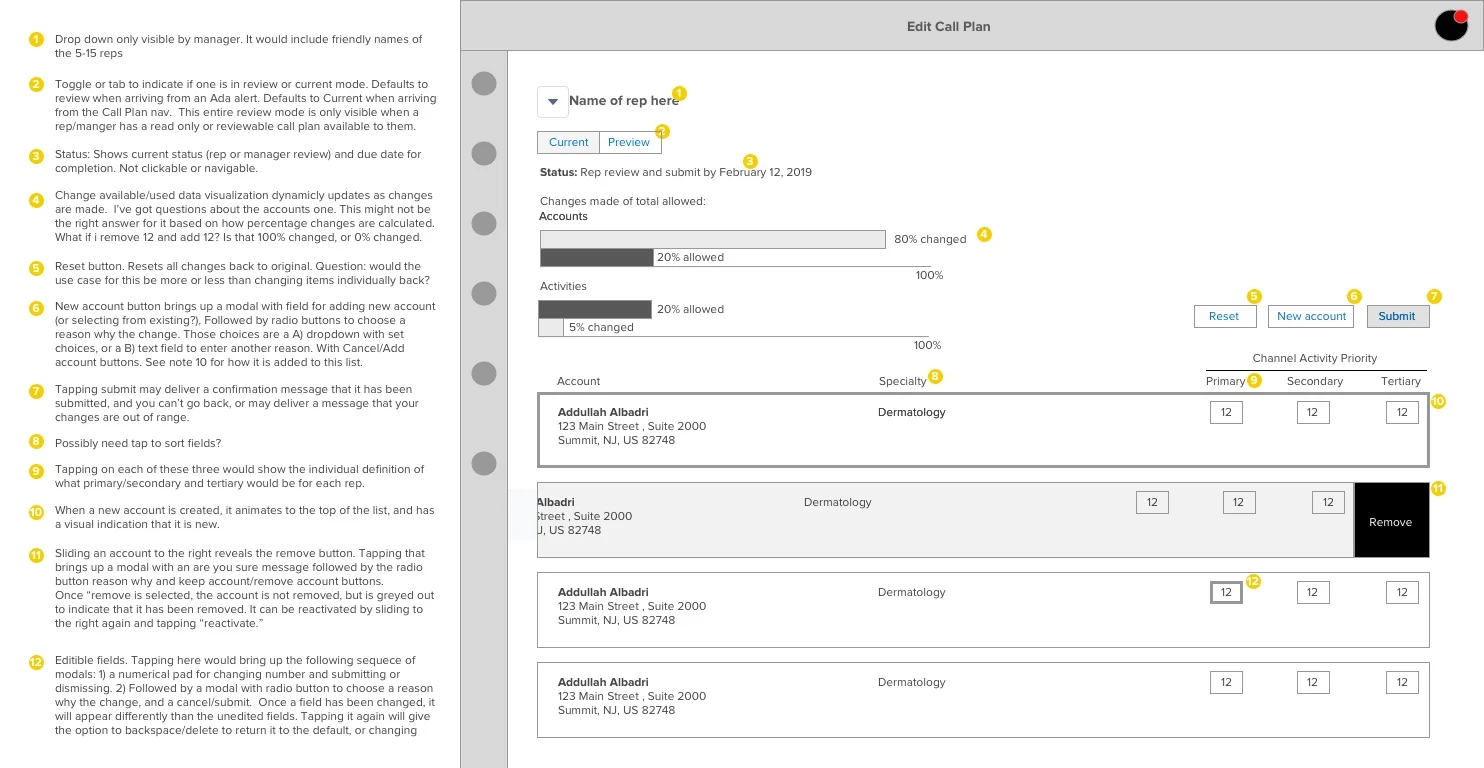
Once I had iterated on the whiteboard enough, I move into Sketch, and start wire framing. I usually have many things to explain to and ask of my stakeholders as we discuss the first wires. Those explanations and questions are annotated here with the yellow dots.
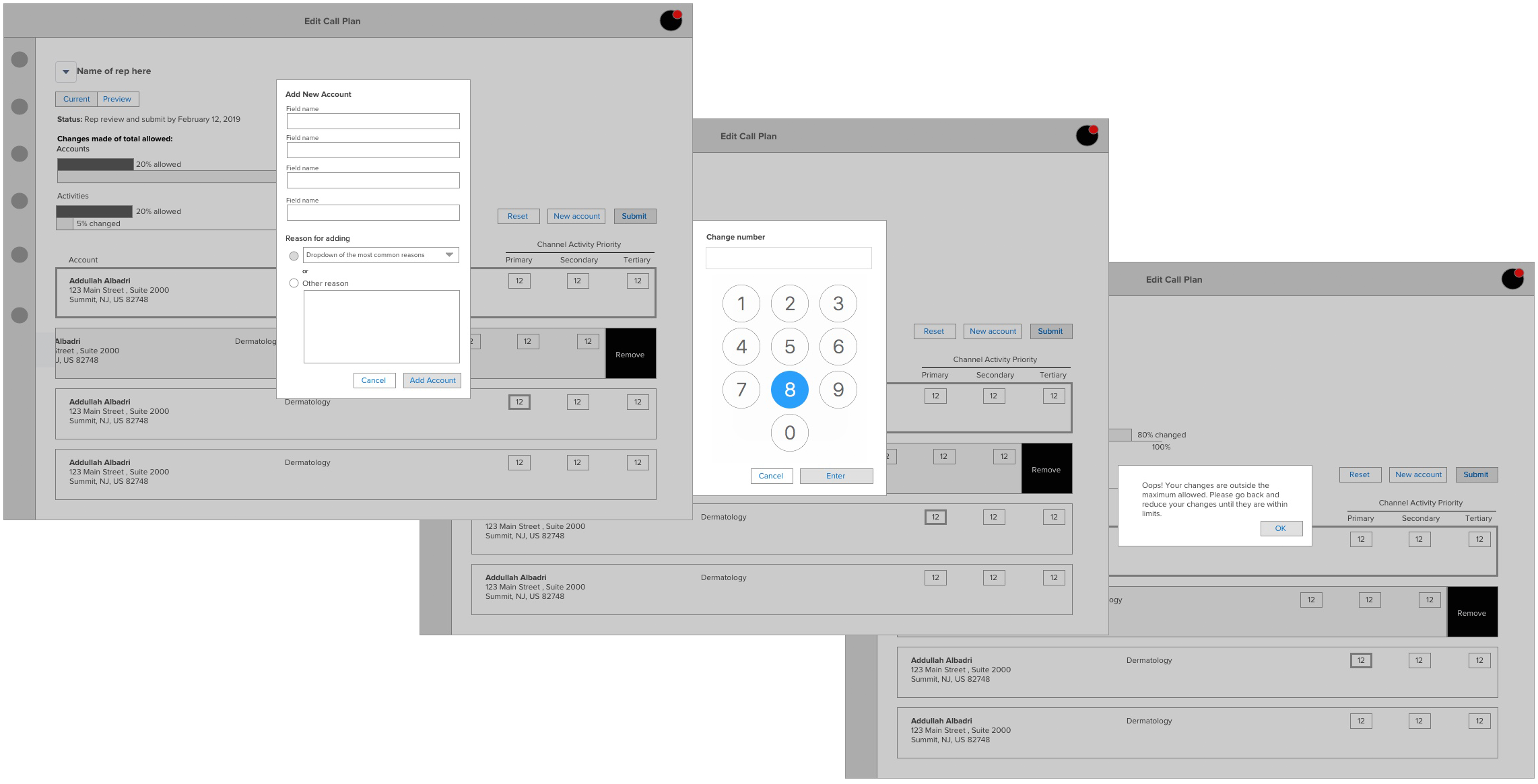
Part of what I pride myself on is thinking through and designing for all of the possibilities. While I typically design for the majority case, I want to be sure all of the edge cases thought through. These modals above are just a few of the scenarios taken into consideration starting all the way back in the discovery phase, and carried through to wireframing here and beyond.
prototyping
I created a simple interactive Invision prototype to illustrate to myself and my stakeholders how the whole thing will work together. It also serves as a great place for commenting and communicating, and a good tool for simple user testing.
user testing
I was able to get a simple prototype with two variations in front of a handful of users to verify if the different user types of Manager and Rep would understand how to interact with the feature. Success with a few small tweaks needed.
After analyzing the results with stakeholders, I went back and made changes for the second and final round of wireframes, and verified with another small round of testing that those changes were successful.
visual design
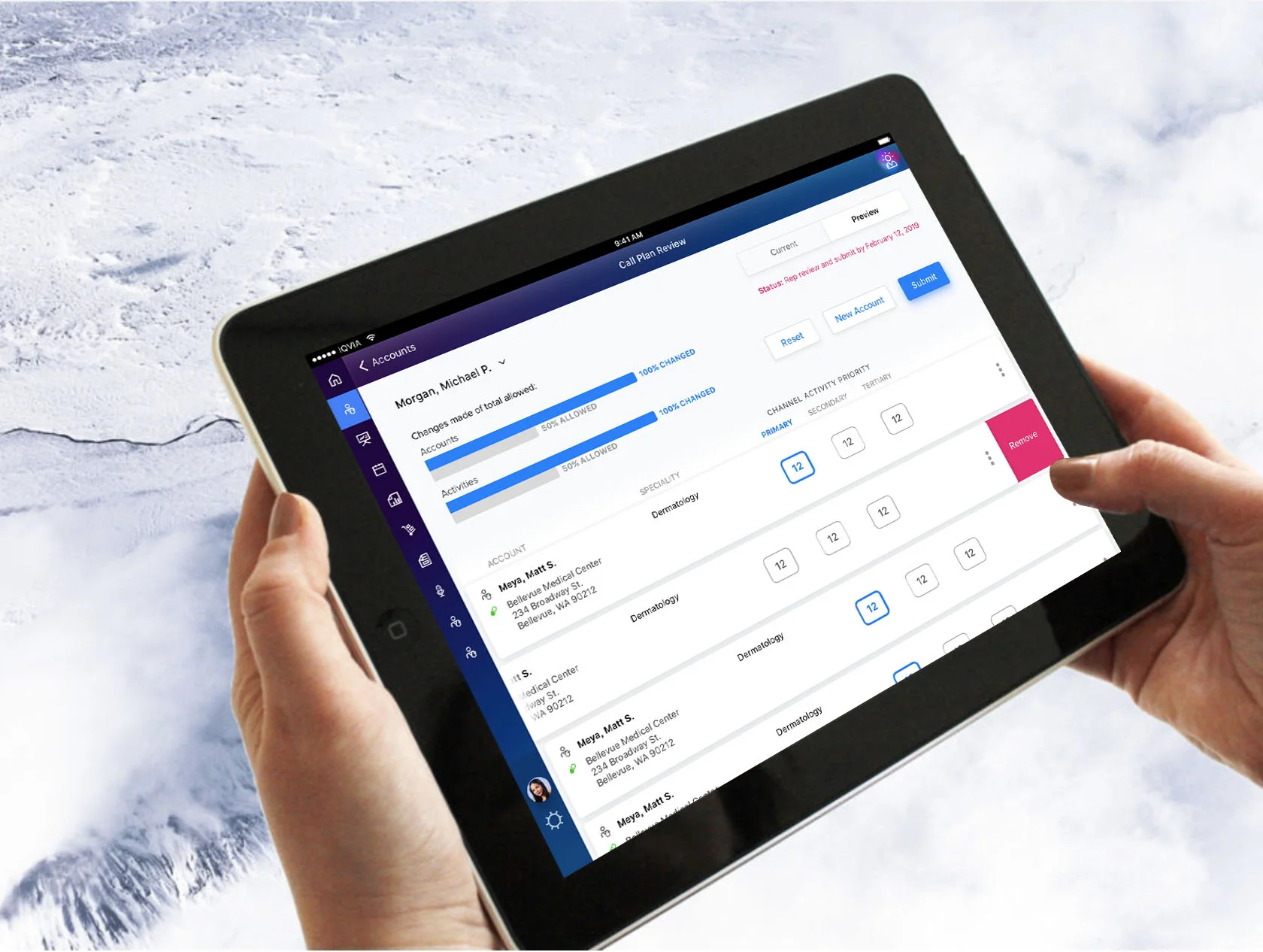
After approval of the wires, I worked with our UI designer to create the final visual design shown here.
results
Once the feature was launched, our sales team was able to nail a multi-million dollar deal with the big customer who was requesting it. Other customers who had expressed interest were also able to benefit from empowering their managers and sales reps.